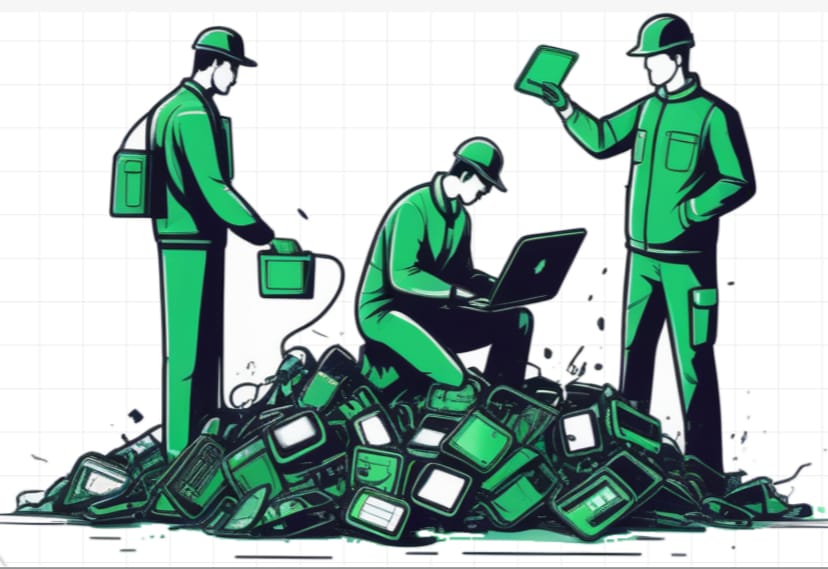
Why E-Waste Management Matters
E-waste, or electronic waste, refers to discarded electronic devices like computers, phones, and televisions. The rapid pace of technological advancement has led to a significant increase in e-waste, posing serious environmental and health risks if not managed properly.
Environmental Impact
Improper disposal of e-waste can have devastating effects on the environment:
- Soil Contamination: E-waste often contains toxic substances like lead, mercury, and cadmium. When these devices end up in landfills, these harmful chemicals can leach into the soil, contaminating it and affecting plant life.
- Water Pollution: Toxic chemicals from e-waste can also seep into groundwater, affecting rivers, lakes, and drinking water sources, endangering aquatic life and human health.
- Air Pollution: Burning e-waste to retrieve valuable metals releases harmful pollutants into the air, including dioxins and furans, which are linked to serious health conditions.
- Resource Depletion: Many electronic devices contain valuable materials like gold, silver, and rare earth metals. Recycling these materials reduces the need for mining and conserves natural resources.
Health Hazards
E-waste contains hazardous materials that pose significant health risks, particularly to those involved in improper recycling practices:
- Lead Poisoning: Lead, found in many electronic devices, can cause severe damage to the nervous system, kidneys, and brain, especially in children.
- Mercury Exposure: Mercury, found in LCD screens and other electronics, can cause damage to the brain, liver, and kidneys and is particularly dangerous for pregnant women and young children.
- Cadmium Toxicity: Cadmium, used in batteries and other components, is known to cause lung and kidney damage, and can accumulate in the human body over time.
- Carcinogenic Risks: Some e-waste contains brominated flame retardants, which are linked to cancer and endocrine disruption.
Global E-Waste Crisis
The global generation of e-waste is growing rapidly, with millions of tons being produced each year. Unfortunately, only a small percentage of e-waste is properly recycled. The majority ends up in landfills or is illegally exported to developing countries, where unsafe and informal recycling practices expose workers and communities to hazardous conditions.
What Can You Do?
Everyone has a role to play in mitigating the e-waste crisis. Here are some steps you can take:
- Reduce: Consider whether you really need the latest gadget. By purchasing fewer electronics and choosing more durable products, you can reduce the amount of e-waste generated.
- Reuse: Before discarding old electronics, consider selling or donating them. Many organizations and schools can benefit from refurbished electronics.
- Recycle: Use certified e-waste recycling programs to ensure that your devices are disposed of responsibly. Recycling not only reduces environmental impact but also helps recover valuable materials.
- Support Legislation: Advocate for stronger e-waste management policies and regulations that promote responsible recycling and hold manufacturers accountable for the end-of-life disposal of their products.
Our Commitment
At Waste Wise, we are dedicated to addressing the e-waste problem by providing comprehensive recycling services, spreading awareness, and advocating for sustainable practices. Join us in our mission to reduce e-waste and create a cleaner, safer environment for future generations.
Join Our Movement
Stay connected with us on social media and participate in our initiatives. Follow us on Instagram to learn more about our efforts, get tips on reducing e-waste, and become part of the solution.
Together, we can make a significant impact on our planet by managing e-waste responsibly. Every action counts!